
91¿´Æ¬Íø

Image
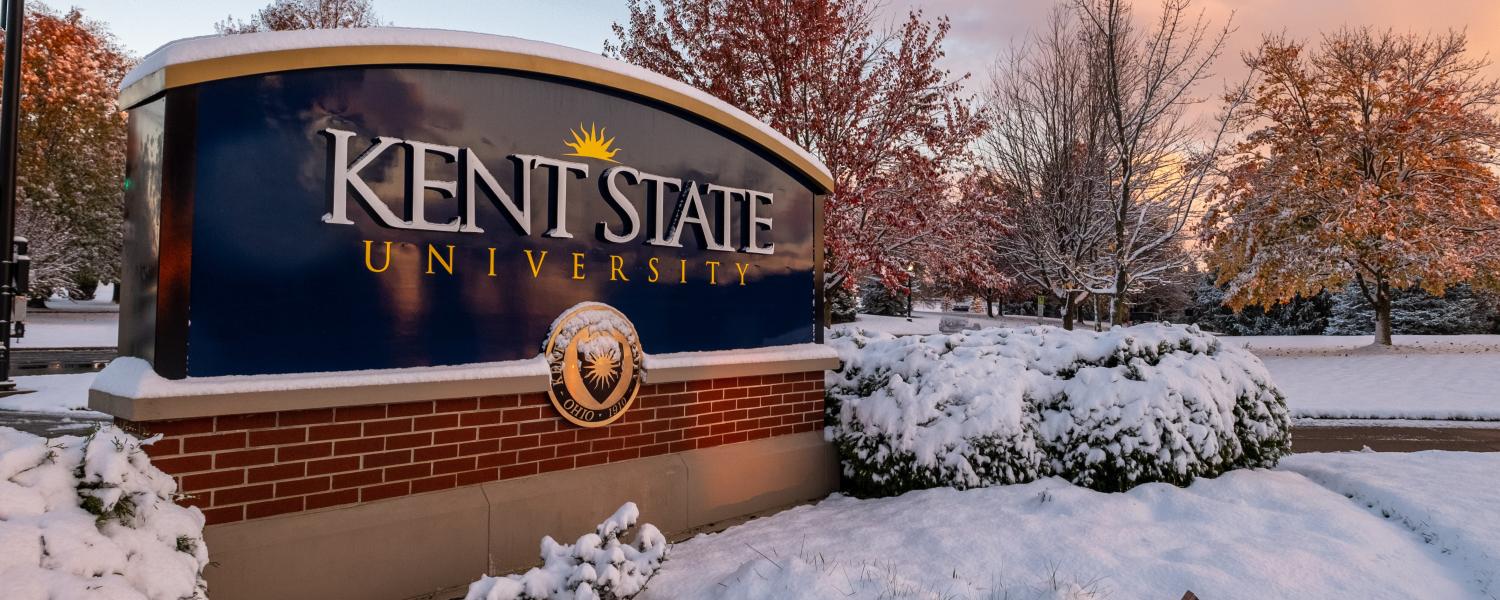
Campus sign in November snow

Secondary Education - M.A.T.

The Master of Arts in Teaching in Secondary Education program is designed for individuals who are passionate about teaching and inspiring the next generation of students. With a focus on hands-on experiences, you'll gain the skills needed to develop engaging lesson plans, manage classroom dynamics and facilitate student learning.

Contact Us

Apply Now
Request Information
Schedule a Visit

What is the Secondary Education M.A.T.?

The Master of Arts in Teaching (MAT) in Secondary Education at 91¿´Æ¬Íø is a graduate-level program that prepares teacher candidates for initial licensure in Ohio and many other states.

The program accepts candidates interested in teaching Language Arts, Mathematics, Science and Social Studies in grades 7-12. Additionally, the program prepares multi-age teachers (PK-12) in Art, Dance, World Languages, Music, Health and Physical Education. This program offers two tracks: One is an accelerated 11-month program, and the other is a part-time two-year program. Both are partially online. The MAT program is offered to recent bachelor and graduate degree holders, as well as career-changing professionals who now desire to become teachers.

The MAT program coursework begins in summers. The annual application deadline is January 15th. Please note that the first contact with the program is a content evaluation to determine the prerequisite content area coursework required for licensure and taken at the undergraduate level. Erin Harwood, Academic Program Director, is your contact for this evaluation. She may be reached by email at eharwood@kent.edu. To formally request a content evaluation for the Secondary Education MAT program, please complete the . Please be aware that due to the high demand of evaluation requests, it can take 2-3 weeks to complete/return an evaluation.

Please direct any questions to Program Coordinator Scott Durham at bdurham4@kent.edu

If you hold an Ohio Alternative License and are interested in progressing to a five-year Professional License, please see Kent 91¿´Æ¬Íø's Alternative Licensure Professional Development Institute page.

Application and admission

Application and admission to the Secondary/Multi-age MAT program involves two complementary but distinct phases.

The first phase involves admission as a post-undergraduate non-degree student. A content evaluation (transcript review) completed by the Graduate Academic Advisor in EHHS (unless noted) determines what prior coursework, if any, can be applied to the intended content area/licensure. The remaining undergraduate content area coursework required for licensure is taken prior to beginning the coursework in the MAT program at your own pace. Almost all potential MAT candidates can expect that they will need additional prerequisite undergraduate courses prior to the MAT. It is a matter of how many hours are required, and this is dependent upon coursework taken in your prior degree program and how closely these courses align with the content courses required in your intended content area/licensure concentration. Most candidates can expect 2-4 semesters of content coursework prior to admission to the 11-month MAT program. In part, this is because the licensure requirements for most degrees prepare educators to teach more than one subject in a discipline - for example, integrated social studies teachers are licensed to teach geography, economics, government, psychology, political science, sociology and history. There is coursework related to each of these disciplines to fulfill the licensure requirements. This is true in the other integrated and multiage licenses, as well.

The second phase of admission is the formal application to the master’s degree program. A detailed description of the steps needed for completion of the application can be found on the page MAT Program: Application Process and Admission Requirements.

Teaching fields

The MAT program offers Adolescent / Young Adult Education licensure (grades 7-12) in the following teaching fields:

  • Integrated Social Studies
  • Integrated Language Arts
  • Integrated Mathematics
  • Integrated Science (licensure in all science areas)
  • Life Sciences (biology)
  • Life Sciences / Chemistry (dual licensure in biology & chemistry)
  • Chemistry / Physics (dual licensure)
  • Earth Sciences

In addition, multi-age licensure (pre-K through grade 12) is available in these areas:

Outline of the eleven-month intensive program

Note: All content coursework must be completed before the start of master's classes.

Summer consists of 13 graduate hours. This coursework prepares students in the background in educational foundations, Educational Psychology, and general methods required to be successful in the classroom. In addition, 30 hours of field experiences in school settings will occur.

Fall semester consists of 13-16 semester hours of courses, focused on teaching specific content (for example, mathematics or art). In addition to these courses, there is a 100-hour field practicum required at a school, which is arranged by a faculty advisor and the Office of Clinical Experience (student teaching) at 91¿´Æ¬Íø.

Spring semester consists of full-time student teaching and 3-6 hours of courses (12-15 hours total). During student teaching, students assume the classroom responsibilities of their mentor teacher. The mentor and KSU student work together to discuss planning, classroom management, and professional development issues. In addition to student-teaching, students take two college courses: Seminar in Secondary Education and Research in Secondary Education.

Outline of the two-year program

Note: The final two semesters (Fall II and Spring II) require availability during daytime school hours.

Summer I consists of 7 hours of courses. These include coursework in principles of secondary teaching, educational psychology, and a seminar with field-based observations and teaching activities. In addition, undergraduate coursework to fulfill licensure requirements will be completed.

Fall I includes 3-6 hours consisting of theories and practices of teaching discipline specific literacies. In addition, undergraduate coursework to fulfill licensure requirements will be completed.

Spring I consists of 3 hours on differentiating instruction. Undergraduate coursework to fulfill licensure requirements will also be completed.

Summer II consists of 7 hours related to the cultural foundations of education and the role of culture in secondary school settings. Undergraduate coursework to fulfill licensure requirements will also be completed.

Fall II consists of 7-12 hours focused on teaching specific content (i.e., English, Math). All final undergraduate coursework to fulfill licensure requirements must be completed. In addition to these courses, there is a 100-hour field practicum required at a school, which is arranged by a faculty advisor and the Office of Clinical Experience (student teaching) at 91¿´Æ¬Íø. Field Practicum hours must be completed during daytime school hours.

Spring II semester consists of full-time student teaching and 3-6 hours of courses (12-15 hours total). Full-time study is required this term. During student teaching, students assume the classroom responsibilities of their mentor teacher. The mentor and the KSU student work together to discuss planning, classroom management, and professional development issues. In addition to student-teaching, students take two graduate courses: Seminar in Secondary Education and Research in Secondary Education.


Program Information for Secondary Education - M.A.T.

Program Description

Full Description

The Master of Arts in Teaching degree in Secondary Education serves individuals who have never held a teaching certificate or license.

There are two options of study:

  1. 11-month option, which requires full-time study beginning the summer of the year admitted and continuing throughout the academic year
  2. two-year option, which allows for part-time enrollment

The Secondary Education major comprises the following concentrations:

  • Art
  • Chemistry/Physics
  • Dance
  • Earth Science
  • English/Language Arts
  • French
  • German
  • Health
  • Integrated Science
  • Latin
  • Life Science
  • Life Science-Chemistry
  • Mathematics
  • Music
  • Physical Education
  • Social Studies
  • Spanish

Professional Licensure Disclosure

This program is designed to prepare students to sit for applicable licensure or certification in Ohio. If you plan to pursue licensure or certification in a state other than Ohio, please review state educational requirements for licensure or certification and contact information for state licensing boards at Kent 91¿´Æ¬Íø's website for professional licensure disclosure.

Admissions for Secondary Education - M.A.T.

For more information about graduate admissions, visit the graduate admission website. For more information on international admissions, visit the international admission website.

Admission Requirements

  • Bachelor's degree from an accredited college or university
  • Minimum 2.750 undergraduate GPA on a 4.000-point scale
  • Official transcript(s)
  • Résumé
  • Essay (1,000 words) explaining desire to teach
  • Questions in Anticipation of Licensure form
  • Content evaluation (to be completed before applying)
  • Two letters of recommendation
  • Interview
  • English language proficiency - all international students must provide proof of English language proficiency (unless they meet specific exceptions to waive) by earning one of the following:1
    • Minimum 79 TOEFL iBT score
    • Minimum 6.5 IELTS score
    • Minimum 58 PTE score
    • Minimum 110 DET score

Applicants will be assessed holistically, considering academic credentials, academic or professional references, non-academic dimensions and other specific program criteria.

1

International applicants who do not meet the above test scores will not be considered for admission.

Application Deadlines

  • Summer Term
    • Priority deadline: January 15

All application materials (including applicable fee, transcripts, recommendation letters, etc.) submitted by this deadline will receive the strongest consideration for admission.

Learning Outcomes

Program Learning Outcomes

Graduates of this program will be able to:

  1. Implement current learning theories in the classroom.
  2. Demonstrate continued professional development.
  3. Understand the scope and sequence of curriculum in their content area for grades seven to 12.
  4. Use reflection on teaching as a tool for improving teaching and student learning.
  5. Incorporate the appropriate use of technology in classroom lessons to increase student learning.
  6. Demonstrate how schools work and how support staff, parents and the community can be utilized to foster and improve their future students' success.
  7. Recognize the importance of planning that incorporate national and state standards for their content area.
  8. Develop and refine skills in planning, assessment and classroom management that maximize learning for all students.

Coursework

Program Requirements

Major Requirements

Major Requirements
ADED 62092ADVANCED PRACTICUM 13
ADED 62145PRINCIPLES OF SECONDARY TEACHING 3
ADED 62191SEMINAR IN SECONDARY EDUCATION 4
ADED 62198RESEARCH IN SECONDARY EDUCATION 3
ADED 67147TEACHING ADOLESCENTS IN THE SECONDARY SCHOOL CULTURE 3
CULT 65530SCHOOLING AND SOCIETY: HISTORY, AIMS AND POLITICS OF EDUCATION 3
EPSY 68901PSYCHOLOGICAL FOUNDATIONS OF EDUCATION 3
SPED 53062CURRICULUM METHODS MILD/MODERATE INTERVENTION 3
Culminating Requirement
ADED 63192SECONDARY EDUCATION STUDENT TEACHING INTERNSHIP 29-10
Concentrations
Choose from the following:3-9
Minimum Total Credit Hours:37-43
1

Teacher candidates are only permitted to repeat a field experience course once. Please see policy for details.

2

Candidates seeking multi-age licensures are required to take a total of 10 credit hours of ADED 63192. Teacher candidates are only permitted to repeat a field experience course once. Please see policy for details.

Art Concentration Requirements

Concentration Requirements
TLCS 67330LITERACY IN THE CONTENT AREAS 3
Methods I Course (in concentration area)3
Methods II Course (in concentration area)3
Minimum Total Credit Hours:9

Chemistry/Physics Concentration Requirements

Concentration Requirements
TLCS 67330LITERACY IN THE CONTENT AREAS 3
Methods I Course (in concentration area)3
Minimum Total Credit Hours:6

Dance Concentration Requirements

Concentration Requirements
TLCS 67330LITERACY IN THE CONTENT AREAS 3
Methods I Course (in concentration area)3
Minimum Total Credit Hours:6

Earth Science Concentration Requirements

Concentration Requirements
TLCS 67330LITERACY IN THE CONTENT AREAS 3
Methods I Course (in concentration area)3
Minimum Total Credit Hours:6

English/Language Arts Concentration Requirements

Concentration Requirements
Methods I Course (in concentration area)3
Methods II Course (in concentration area)3
Minimum Total Credit Hours:6

French Concentration Requirements

Concentration Requirements
TLCS 67330LITERACY IN THE CONTENT AREAS 3
Methods I Course (in concentration area)3
Minimum Total Credit Hours:6

German Concentration Requirements

Concentration Requirements
TLCS 67330LITERACY IN THE CONTENT AREAS 3
Methods I Course (in concentration area)3
Minimum Total Credit Hours:6

Health Concentration Requirements

Concentration Requirements
TLCS 67330LITERACY IN THE CONTENT AREAS 3
Methods I Course (in concentration area)3
Minimum Total Credit Hours:6

Integrated Science Concentration Requirements

Concentration Requirements
TLCS 67330LITERACY IN THE CONTENT AREAS 3
Methods I Course (in concentration area)3
Minimum Total Credit Hours:6

Latin Concentration Requirements

Concentration Requirements
TLCS 67330LITERACY IN THE CONTENT AREAS 3
Methods I Course (in concentration area)3
Minimum Total Credit Hours:6

Life Science Concentration Requirements

Concentration Requirements
TLCS 67330LITERACY IN THE CONTENT AREAS 3
Methods I Course (in concentration area)3
Minimum Total Credit Hours:6

Life Science-Chemistry Concentration Requirements

Concentration Requirements
TLCS 67330LITERACY IN THE CONTENT AREAS 3
Methods I Course (in concentration area)3
Minimum Total Credit Hours:6

Mathematics Concentration Requirements

Concentration Requirements
Methods I Course (in concentration area)3
Methods II Course (in concentration area)3
Minimum Total Credit Hours:6

Music Concentration Requirements

Concentration Requirements
TLCS 67330LITERACY IN THE CONTENT AREAS 3
Methods I Course (in concentration area)3
Minimum Total Credit Hours:6

Physical Education Concentration Requirements

Concentration Requirements
TLCS 67330LITERACY IN THE CONTENT AREAS 3
Minimum Total Credit Hours:3

Social Studies Concentration Requirements

Concentration Requirements
TLCS 67330LITERACY IN THE CONTENT AREAS 3
Methods I Course (in concentration area)3
Minimum Total Credit Hours:6

Spanish Concentration Requirements

Concentration Requirements
TLCS 67330LITERACY IN THE CONTENT AREAS 3
Methods I Course (in concentration area)3
Minimum Total Credit Hours:6

Graduation Requirements

Minimum Major GPA Minimum Overall GPA
- 3.000
  • No more than one-half of a graduate student’s coursework may be taken in 50000-level courses.
  • Grades below C are not counted toward completion of requirements for the degree.

Additional Coursework: An analysis of additional content-area coursework required at the post-undergraduate level will be completed before entering into the program, and a plan of study will be created based on transcript analysis and current licensure requirements by the Ohio Department of Education and Workforce. A minimum C grade is required in each of these courses. This coursework would be in addition to requirements for the M.A.T. degree in Secondary Education.

Program Delivery

  • Delivery:
    • In person
  • Location:
    • Kent Campus

Accreditation for Secondary Education - M.A.T.

Council for the Accreditation of Educator Preparation (CAEP)

Examples of Possible Jobs and Salaries for Secondary Education - M.A.T.

Education teachers, postsecondary

2.1%

slower than the average

74,900

number of jobs

$72,090

potential earnings

Secondary school teachers, except special and career/technical education

-1.6%

decline

1,094,500

number of jobs

$64,580

potential earnings

Notice: Career Information Source
* Source of occupation titles and labor data comes from the U.S. Bureau of Labor Statistics' . Data comprises projected percent change in employment over the next 10 years; nation-wide employment numbers; and the yearly median wage at which half of the workers in the occupation earned more than that amount and half earned less.

More about the MAT-Secondary Education program:


Request Information

Loading...